
HOME / REPAIRS
Garage door repairs in Charlestown
Verdict first, then the work.
Most garage door faults have a short list of honest causes. The technician's first job is to find yours with a level, a tape and a square, and tell you what it is in plain English. Then, and only then, we talk about fixing it.
The job sheets
What we repair.
 Springs & counterbalance
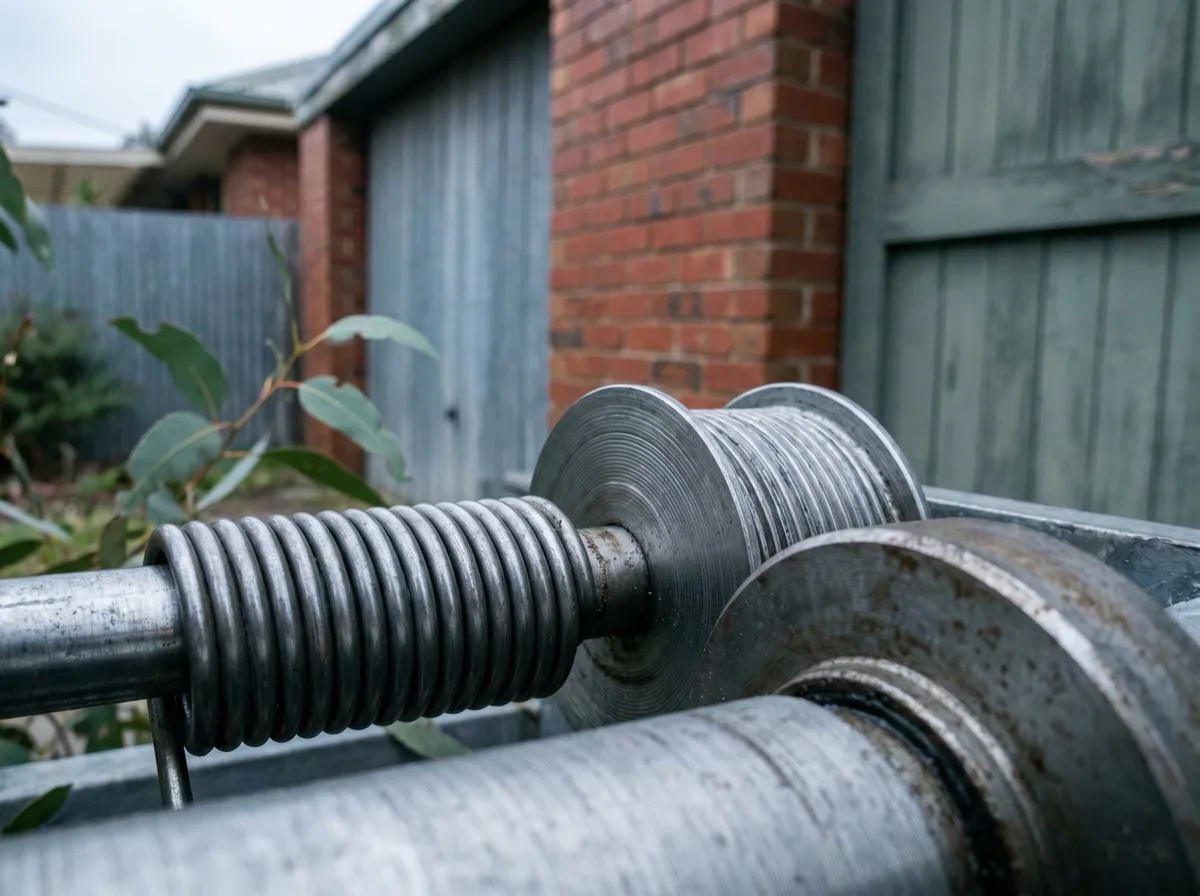
The spring does the lifting; the opener and your arm only steer. When a torsion spring lets go, it usually goes with a bang, and the door becomes its full dead weight. A door that's gone heavy, or slams on the way down, is the same system failing slowly instead of all at once.
A WOUND SPRING STORES SERIOUS ENERGY. THIS IS NEVER A DIY JOB.
 Tracks, rollers & alignment
Scraping, catching, jumping, or a door that's left the track altogether. Sometimes it's worn rollers or a bent length of track. On Charlestown's sloped and under-house blocks, it's often the geometry: a frame that's moved slightly, so the door is running through a shape it wasn't fitted to.
STOP USING A DOOR THAT'S PART-WAY OFF ITS TRACK. EVERY FORCED CYCLE COSTS.
 Out-of-square adjustment
The quiet speciality of this patch. A gap at one corner, a rub low on one jamb, a door that binds in winter and runs in summer: these are usually the opening moving, not the door failing. We measure plumb, level and square, and adjust the door to the opening it actually lives in now. The full story is in the guide.
 Openers & remotes
Motors that strain, stop, reverse or refuse. Often the opener is protecting itself: safety beams interrupted, force limits tripping, or a binding door it can't drag. We sort the motor from the door, fix what's actually wrong, and set the safety functions properly. Anything on the mains side is licensed electrical work, confirmed on site. Opener recalls and safety notices are tracked by the ACCC's Product Safety register.
 Service & tune
The biggest moving part of the house, serviced like it matters: balance checked, tracks and hinges inspected, rollers and springs looked over, opener forces and safety reverse tested, the lot lubricated with the right stuff (not whatever's in the shed). An annual tune is how a door on moving ground stays boring.
The first ten minutes
Before anyone talks money.
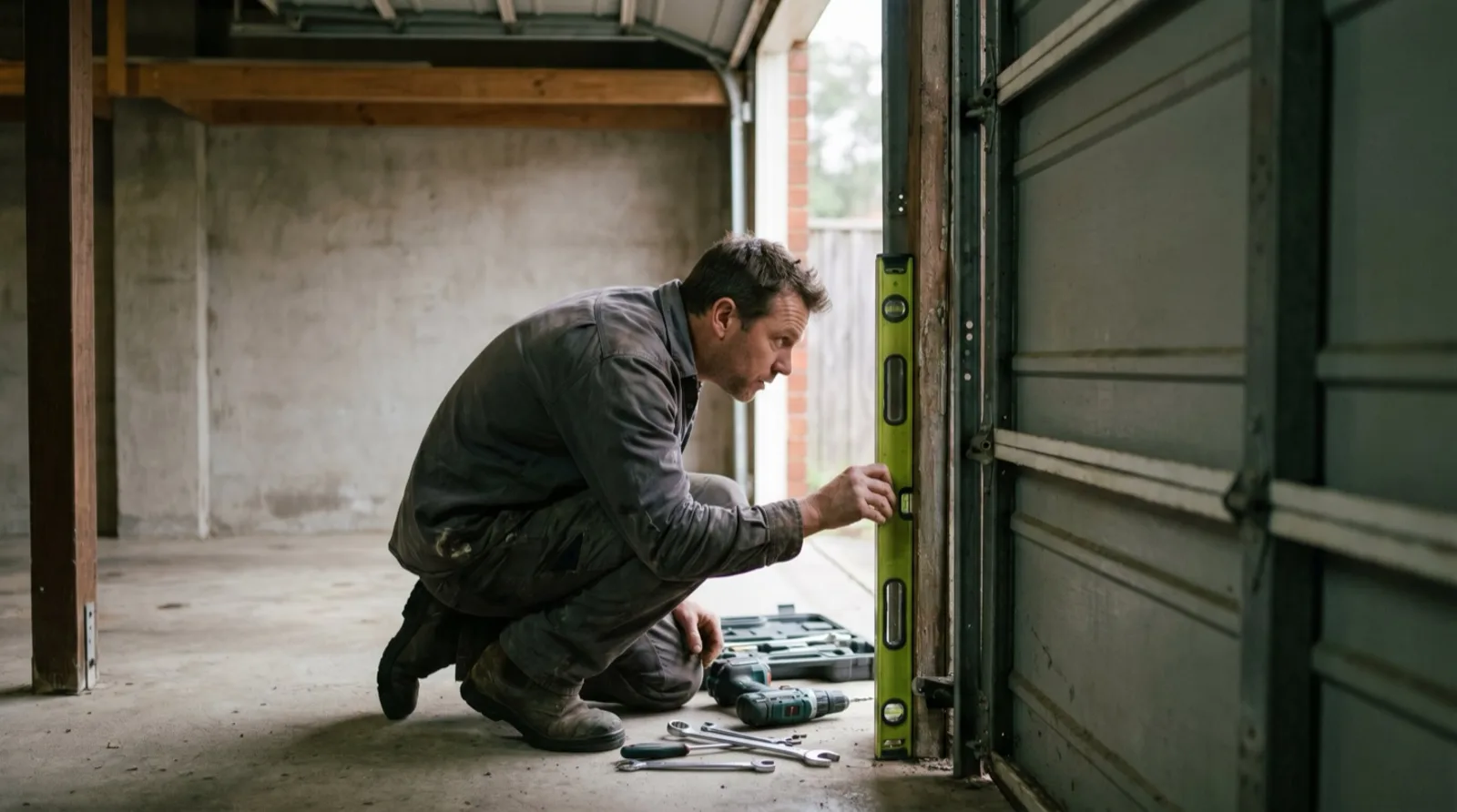
- Plumb. The level goes on both jambs and both tracks. A track leaning a few millimetres explains a world of scraping.
- Level. Across the head of the opening and along the floor line. Floors on sloped blocks are rarely as flat as they look.
- Square. Corner-to-corner. If the diagonals disagree, the frame has racked, and that, not the spring, might be your whole problem.
- Then the verdict. What it is, what it needs, and whether it's a ten-minute adjustment or a real repair. Straight, either way.
That's the whole reason for the name. If the reading says it's minor, you hear that it's minor.